Thesis
Powering the Bajío's Japanese plants
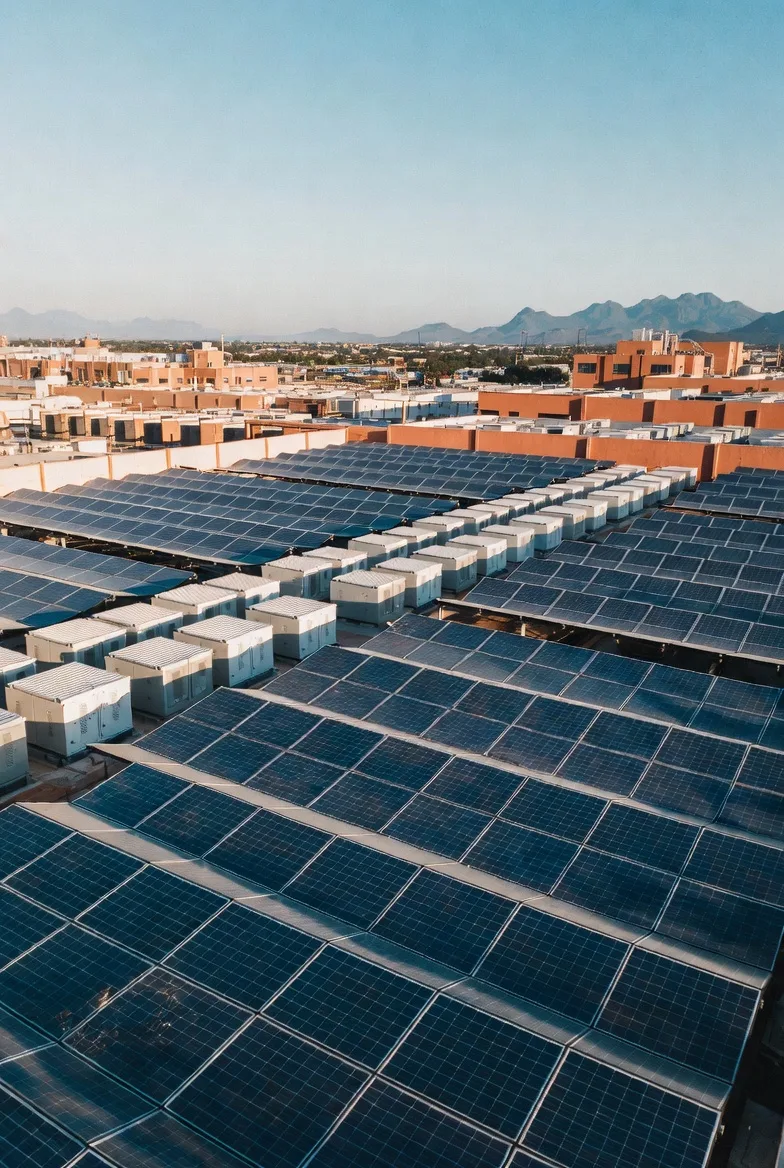
The Bajío's Japanese automakers have largely solved their clean electricity. Their suppliers have not. Corporate 2035 targets cascade down the chain, and the 2025 rules open the door to 0.7–20 MW self-supply.
Origination and structuring of USD 5–50 million infrastructure projects across the Bajío.
Let's discuss your plant's energyBajío Ventures · July 2026 · Japan in the Bajío, 5 of 5
The previous instalments showed three things: two of the Bajío’s Japanese assembly plants run above 90% of capacity, the supply base is shifting towards capital- and energy-intensive processes, and the tariff favours plants with high-demand products. This instalment asks where their electricity comes from and what is missing.
The automakers: a largely solved problem
| Plant | What is known about its energy | Source |
|---|---|---|
| Honda, Celaya | Wind power agreement with Iberdrola México, 100% renewable with guarantees of origin, for Celaya and El Salto (Jalisco). Avoids 63,826 t of CO₂ a year. Volume and term not disclosed. | Honda and Iberdrola, Mar 2025 |
| Nissan, Aguascalientes | Wind self-supply with Enel (Oaxaca) since 2013: at first it covered about half of A1’s demand; by 2021 it fell to about 35% after regulatory blocks. Nissan Mexicana now reports that more than 90% of its manufacturing energy comes from CO₂-free sources. Solar panels at A2’s vehicle processing centre. | Expansión, 2021; La Razón, Jun 2026 |
| Toyota, Apaseo el Grande | Solar panels on site; no capacity or renewable share disclosed. Reuses 80% of process water. | Cluster Industrial, Jun 2026 |
| Mazda, Salamanca | We found no published renewable contract or solar installation for the plant. | — |
Targets that cascade down the chain
The Japanese parent companies have targets that include their plants outside Japan:
| Company | Target |
|---|---|
| Mazda | Carbon-neutral factories worldwide by 2035; supply chain by 2050 |
| Nissan | −52% manufacturing CO₂ by fiscal 2030 versus 2018; carbon neutral by 2050 |
| Honda | Carbon neutral by 2050 across products and corporate activities; 100% renewable energy within its “Triple Action to Zero” strategy |
| Denso | Own operations carbon neutral by 2035 |
| Aisin | Carbon-neutral production by 2035 |
| Toyota Tsusho | Joined RE100 in May 2026: 100% renewable electricity by 2040 |
Mazda’s supply-chain target and the Denso and Aisin targets for their own plants are the ones that matter for the Bajío. The automakers have already contracted at scale. Most suppliers have published nothing.
The regulatory tool
The Electricity Sector Law of 18 March 2025 sets out self-supply in three sizes:
| Size | What it requires |
|---|---|
| Below 0.7 MW | Distributed generation, no generation permit |
| 0.7 to 20 MW, grid-connected | Self-supply permit with a simplified procedure before the National Energy Commission (agreement published in the DOF on 6 August 2025) |
| Above 20 MW | Ordinary generation permit |
A typical Japanese supplier plant in Silao or Irapuato fits in the first two sizes. That is where the market is.
Japanese capital is already in generation
Japan does not start from zero in Bajío energy:
- Tokyo Gas owns 49% of the El Bajío combined-cycle plant in Guanajuato: 626 MW, of which 495 MW is sold to CFE under a 25-year contract; it has operated since 2002.
- JBIC, the Japan Bank for International Cooperation, financed Mitsubishi Heavy Industries turbines in 2024 for a CFE combined-cycle plant of about 467 MW in San Luis Potosí.
- In October 2025, JBIC opened its fifth GREEN line with Bancomext for renewable energy and energy efficiency in Mexico: up to USD 100 million.
The reading
- The client is the supplier, not the automaker. The automakers already hold contracts at scale. The open market is the ~150 Japanese companies in Guanajuato and those in Aguascalientes, whose demand fits the self-supply ranges.
- The corporate target sets the date. If the parent wants carbon-neutral plants by 2035, the Bajío plant needs to choose its solution before 2030. Between study, permit, interconnection and construction, a self-supply project does not fit in a single budget year.
- Aggregation lowers cost. Parks with several Japanese suppliers (Guanajuato Puerto Interior in Silao and Castro del Río in Irapuato) allow several projects to be structured with one design, one standard contract and one lender.
- Financing can speak Japanese. JBIC’s lines with Bancomext already exist. A project that reaches the parent company in the format of its own development bank meets less friction.
Bajío Ventures originates and structures this kind of project: self-supply, efficiency and process heat for industrial plants in the Bajío corridor.
In this series: 1. Forty years of Japan in the Bajío · 2. The Bajío’s Japanese automakers by the numbers · 3. 150 Japanese companies: the Bajío supply base · 4. 15 versus 19: the tariff · 5. Powering the Bajío’s Japanese plants
Bajío Ventures is a Mexican energy infrastructure investment group based in Guanajuato. We originate and structure USD 5–50 million projects across the Bajío corridor.
Sources: Honda de México and Iberdrola, Mar 2025 · Iberdrola, clean energy for Honda · Expansión, Nissan’s wind power, 2021 · La Razón, Nissan Mexicana manufacturing, Jun 2026 · Cluster Industrial, Toyota Guanajuato and the Environmental Challenge 2050, Jun 2026 · Mazda, carbon-neutral factories by 2035 · Nissan, corporate activities and climate · Automotive Fleet, Honda’s road to zero impact, 2024 · Aisin, carbon neutrality · JCN Newswire, Denso, 2021 · Toyota Tsusho joins RE100, May 2026 · Electricity Sector Law, art. 30 · Greenberg Traurig, CNE agreement on self-supply permits, Aug 2025 · Power Technology, El Bajío combined-cycle plant · JBIC, buyer’s credit for San Luis Potosí combined cycle, 2024 · JBIC, fifth GREEN line with Bancomext, Oct 2025
Origination and structuring of USD 5–50 million infrastructure projects across the Bajío.
Let's discuss your plant's energyThis article is also available in Spanish. Read in Spanish