Electromobility
The bus before the car
Transport electrification in Mexico is moving faster in buses than in private cars. In Mexico and in California the pattern is the same: captive fleets with fixed routes and a public or corporate buyer.
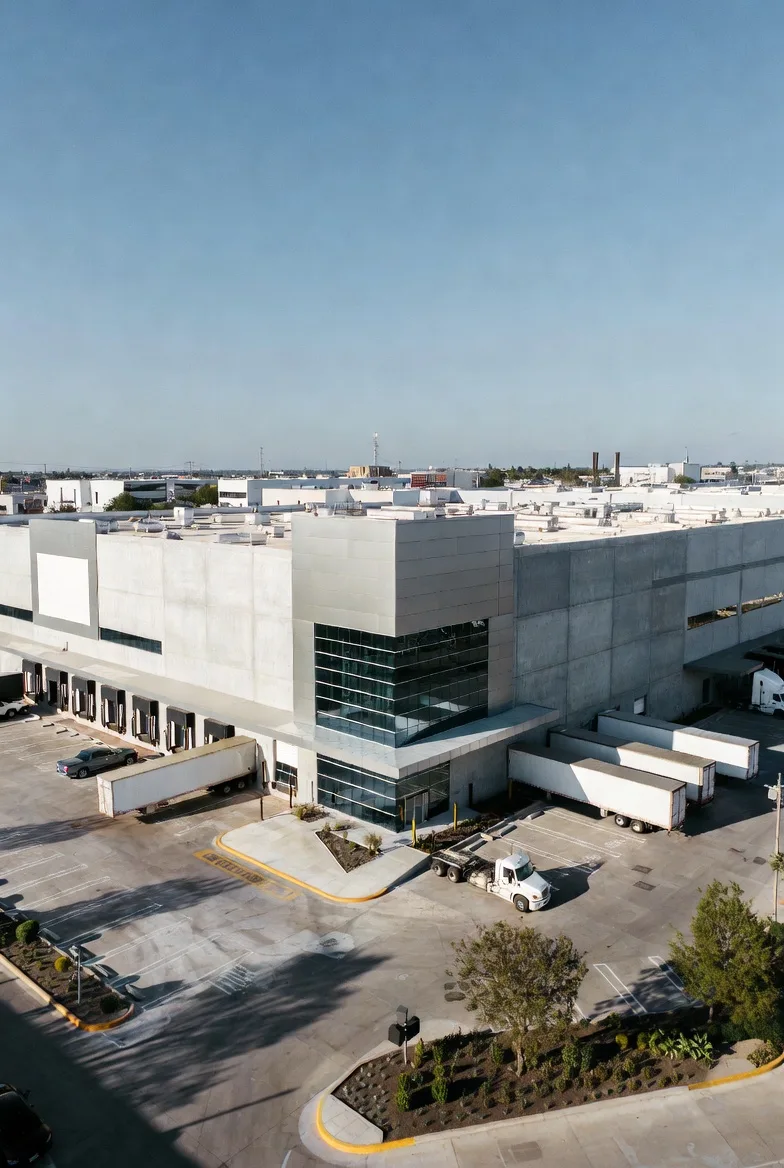
Transport electrification in Mexico is moving faster in buses than in private cars.
The electric fleet already exceeds a thousand units
As of E-Bus Radar’s August 2026 cut, Mexico operates 1,114 electric buses in more than 11 cities, including Mexico City, Guadalajara, Monterrey, Cancún, Mérida and San Luis Potosí. Mexico City’s Metrobús has about 168 electric units, 20% of its fleet, and plans to reach 60% by 2033, around 700 units. In 2023 Mérida launched the IE-TRAM, the first 100% electric BRT in the southeast.
Federal policy
The Ministry of Economy stated that Plan México includes the Rutas del Bienestar to replace conventional transport with electric units, because fleets 20 to 25 years old still run in several cities; Chetumal will be one of the model projects, with 66 electric units.
Staff transport is still diesel
It carries hundreds of thousands of workers to industrial parks and has not yet been electrified. In Mexicali, TPM serves 15 companies with 100 units. Its 2025 renewal was 15 Mercedes-Benz LO 916/48 buses with Euro V engines and air conditioning, for 35 passengers. Climate weighed on the purchase: the air-conditioning supplier was the only one able to cool the whole bus in the state’s extreme temperatures.
California: two rules, two outcomes
For private cars, the Advanced Clean Cars II rule set 35% zero-emission new sales for model year 2026, 68% in 2030 and 100% in 2035. In June 2025, three U.S. congressional resolutions were signed into law revoking California’s federal waivers for that rule and for its truck rules; a coalition of states sued. The state’s ability to enforce those targets is limited at least until the litigation is resolved.
For buses, the rule still stands. The Innovative Clean Transit regulation, adopted in 2018, requires that from 2029 100% of transit agencies’ new purchases be zero-emission buses, with full transition targeted for 2040. Large agencies already had to buy 25% in 2023 and 50% in 2026.
The pattern
In California and in Mexico, sustained electrification happens in captive fleets with fixed routes, their own depot and a public or corporate buyer.
Bajío Ventures is a Mexican energy infrastructure investment group based in Guanajuato. It works on three fronts: capital, a data platform on the regional industrial base, and a German industrial channel. It has its own advisory presence in Berlin.
This article is also available in Spanish. Read in Spanish