Regulation
The Bajío's grid is decided in June
Grid expansion runs on an annual cycle. Those who know the calendar can shape it with data; those who don't find out when the capacity is gone.
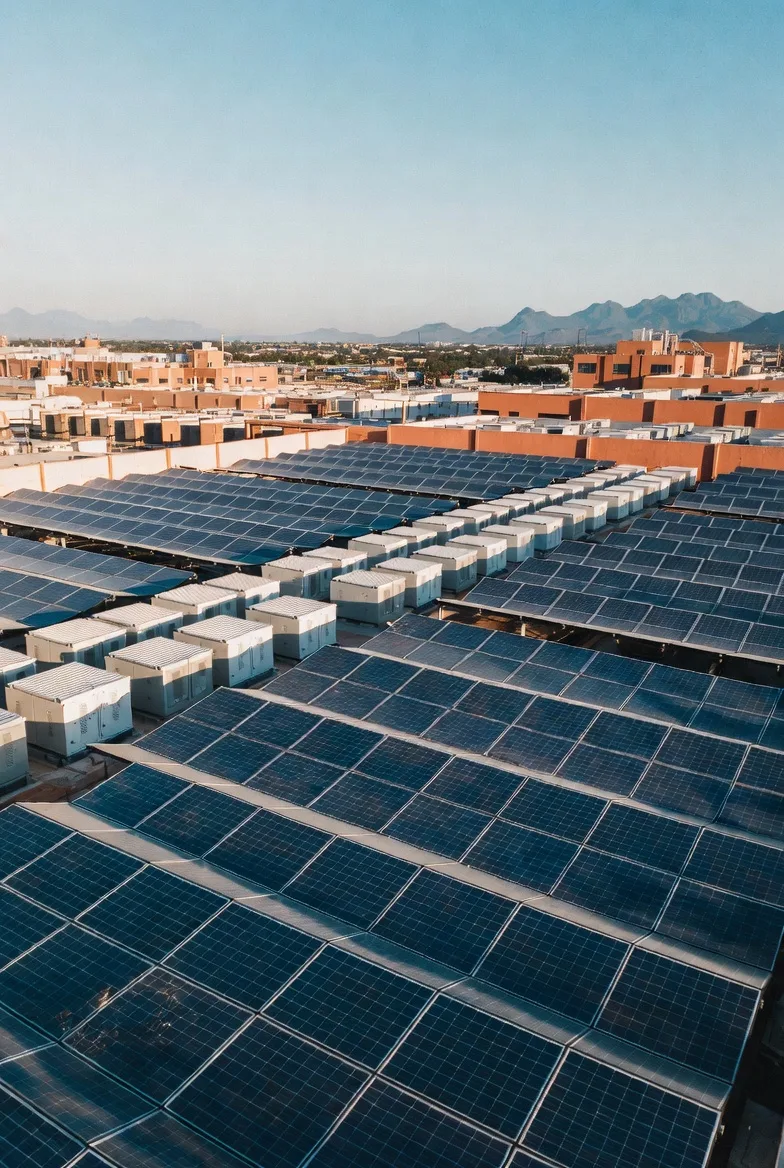
Documented future demand by substation for industrial parks, developers and municipalities across the Bajío.
Let's discuss your projectBajío Ventures · May 2026 · Grid First, 3 of 4
Grid expansion runs on an annual cycle. Those who know the calendar can shape it with data; those who don’t find out when the capacity is gone.
The PAM cycle
CENACE prepares the Expansion and Modernization Program for the National Transmission Grid (PAMRNT). CFE Distribution prepares the one for the General Distribution Networks (PAM RGD). Both have a horizon of at least 15 years and are updated every year:
| Period | Stage |
|---|---|
| June–December | CENACE runs the studies: interconnection and connection requests, demand forecasts, expansion |
| February | CENACE, with CFE, proposes the program |
| March–May | The CNE issues its opinion (30 business days), SENER authorizes (30 business days) and it is published |
Requests already in the queue are an input to the studies. A need that shows up after they start, in practice, waits another year.
Location is already a filter
Binding planning now decides where a project fits. The October 2025 priority permit call only processes projects in the regions listed in its technical annex. The mixed-development call CFE published on February 6, 2026 is open only in regions where a capacity requirement has been identified. And IMCO documented in 2025 years of under-investment in transmission, with congestion in the northeast and the center of the country. Grid capacity is no longer an assumption: it is a condition of entry.
Who sees demand first
By count, most new loads connect at medium voltage, below 69 kV, through CFE Distribution. That is why Distribution sees the growth of housing developments, industrial buildings and retail before anyone else. Demand that hasn’t been formalized yet —parks under development, industrial relocation, electrification of processes and fleets— often appears in no request at all.
Recommendation
The Bajío needs to arrive at the study cycle with documented future demand by substation: expected megawatts, date and location. Industrial parks, developers, municipalities and the state government hold that information in scattered form. Bajío Ventures proposes consolidating it in a technical format useful to CENACE and CFE Distribution, in time for the cycle that starts in June and, at the latest, before CENACE submits its proposal in February 2027.
In this series: 1. Who decides what on Mexico’s power grid · 2. 24 months: the real interconnection timeline · 3. The Bajío’s grid is decided in June · 4. What Baja California teaches the Bajío
Sources: Regulations of the Electricity Sector Law, art. 12 · PAMRNT and RGD of the MEM 2025–2039 (CENACE) · PAM RGD 2025–2039 (CFE Distribution) · Holland & Knight, priority permit call (Oct 2025) · Garrigues, CFE mixed-development call (Feb 2026) · IMCO, power system infrastructure (May 2025)
This content is for information only and does not constitute legal, regulatory or investment advice.
Bajío Ventures — a Mexican energy-infrastructure investment group based in Guanajuato: capital, a data platform on the region’s industrial base, and a German industrial channel, with its own advisory presence in Berlin.
Documented future demand by substation for industrial parks, developers and municipalities across the Bajío.
Let's discuss your projectThis article is also available in Spanish. Read in Spanish